
Seriously hurt in a Connecticut car crash?
A serious crash case is won or lost on the lawyer you choose. Here is what matters in the first days, what the insurance company is doing while you recover, and why your case belongs with a lawyer who is independently rated among the best.
Tell us what happened.
Choose the situation that best describes what happened. We'll point you toward the information that can help you understand your next step.
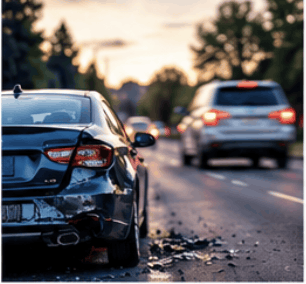
Car Accident
As driver, passenger, or bystander
→

Truck or 18-Wheeler
Commercial truck or large vehicle accident
→

Motorcycle
Injured as a rider or passenger
→
Pedestrian Hit by a Vehicle
Struck by a car or other vehicle
→

Slip and Fall
Injuries caused by slippery or unsafe surfaces
→
Trip and Fall
Injuries caused by slippery or unsafe surfaces
→

Dog Bite or Animal Attack
Bites or injuries caused by an animal
→
Bicycle
Injuries involving a bicycle on the road or path
→
Rideshare (Uber or Lyft)
Accidents involving Uber, Lyft, or another rideshare
→

Bus, Train, Plane or Cab
Injuries involving public or commercial transportation
→

Medical Malpractice
Doctor or hospital error
→

Wrongful Death
Lost a loved one due to another party's actions
→
Hit-and-Run
The driver left the accident scene
→

Injured outside Connecticut
→

Something Else
Another type of accident or personal injury
→That's okay. Start with the situation that feels closest to what happened.
What to do right now
Get examined, even if you feel fine
Adrenaline masks pain. Neck, back and head injuries often surface days later, and a gap between the crash and your first visit is the first thing an adjuster points to.
Photograph everything
Both vehicles, the whole scene, skid marks, road conditions, traffic signals, and your visible injuries over the following days.
Get the police report number
Ask the responding officer for the case number and department. The written report usually takes several days and is central to proving fault.
Write down witnesses
Names and contact details. Witnesses are almost impossible to find a month later, and one independent witness can settle a fault dispute.
Contact Find A Great Connecticut Attorney
Get matched with a top-rated lawyer to discuss your injury case, understand your options, and take the next steps toward protecting your rights.
Protect My Case Now →Do not give a recorded statement
The other driver's adjuster will reach out fast and sound friendly. That conversation is evidence collection. Politely decline, take their name and claim number, and get advice first.
What actually affects your claim
No honest lawyer can give you a number on day one. These are the things that move it, and the things a good lawyer documents from the start.
Get matched with a rated lawyer →Medical treatment
What your doctors found, what they did, and whether care was consistent from the start.
Permanency
Whether a doctor assigns a permanent impairment rating, which often changes a claim's value substantially.
Lost income
Time out of work, reduced hours, and any effect on what you can earn going forward.
Available insurance
The at-fault driver's limits, plus your own underinsured motorist coverage, which people often forget they have.
Fault and evidence
How clear liability is, and whether the insurer is trying to shift part of the blame onto you.
Liens to be repaid
Health insurance, Medicare or Medicaid may have repayment rights. Negotiating these well changes what you actually keep.
Four rules that decide Connecticut car accident claims
Two years, usually
Most Connecticut negligence injury claims must be filed within two years (C.G.S. § 52-584). Claims involving a city, town or state road can carry much shorter written-notice deadlines.
Partial fault is not fatal
Connecticut follows modified comparative negligence (C.G.S. § 52-572h). You can recover if you were not more at fault than the other side, reduced by your share.
Your own policy may pay
Uninsured and underinsured motorist coverage on your own policy can be the largest source of recovery when the at-fault driver carries little insurance.
Reckless driving can raise damages
Certain reckless conduct, such as drunk driving or serious speeding, can support double or triple damages under C.G.S. § 14-295 when properly pleaded.
General information about Connecticut law, not legal advice about your situation. Deadlines and exceptions vary, and only a lawyer reviewing your facts can tell you what applies to you.
Not every car crash needs the same lawyer.
A clear rear-end collision with three months of physical therapy is a different case from a multi-vehicle crash with a disputed light, a commercial vehicle, or a brain injury. Some lawyers resolve volume efficiently. Others try catastrophic cases to verdict. Both can be excellent, and hiring the wrong one for your case costs you.
That is why we start with an objective filter: every lawyer we refer to holds an AV Preeminent, Best Lawyers or Super Lawyers rating. Then Attorney Hastings uses four decades in Connecticut injury law to select a highly qualified, rated lawyer who regularly handles serious crash cases.
Match me with a top-rated lawyer →Questions to ask any lawyer you meet
- 01 Who will actually handle my file day to day?
- 02 How many cases like mine have you taken to trial?
- 03 What are the case costs, and who pays them if we lose?
- 04 How will you handle my health insurance lien?
- 05 How often will I hear from you, and from whom?
One useful email a week
New episodes, a Connecticut case explained in plain English, and the deadlines worth knowing before you need them. Unsubscribe any time.
Subscribing does not create an attorney-client relationship.
